
The Many Faces of Fearlessness
Some actors play characters. Sarah Paulson dissects them. She fractures into them. She inhabits their sharp edges. She finds humanity in instability.
And in doing so, she has become one of the defining actresses of prestige television.
Who Is Sarah Paulson?
Born in Tampa, Florida, raised between Florida and New York, Paulson trained at the American Academy of Dramatic Arts.
She began in theater. She built slowly. She was never overnight.
Before prestige television made her ubiquitous, she worked in:
- Stage productions
- Guest arcs
- Supporting roles
- Independent films
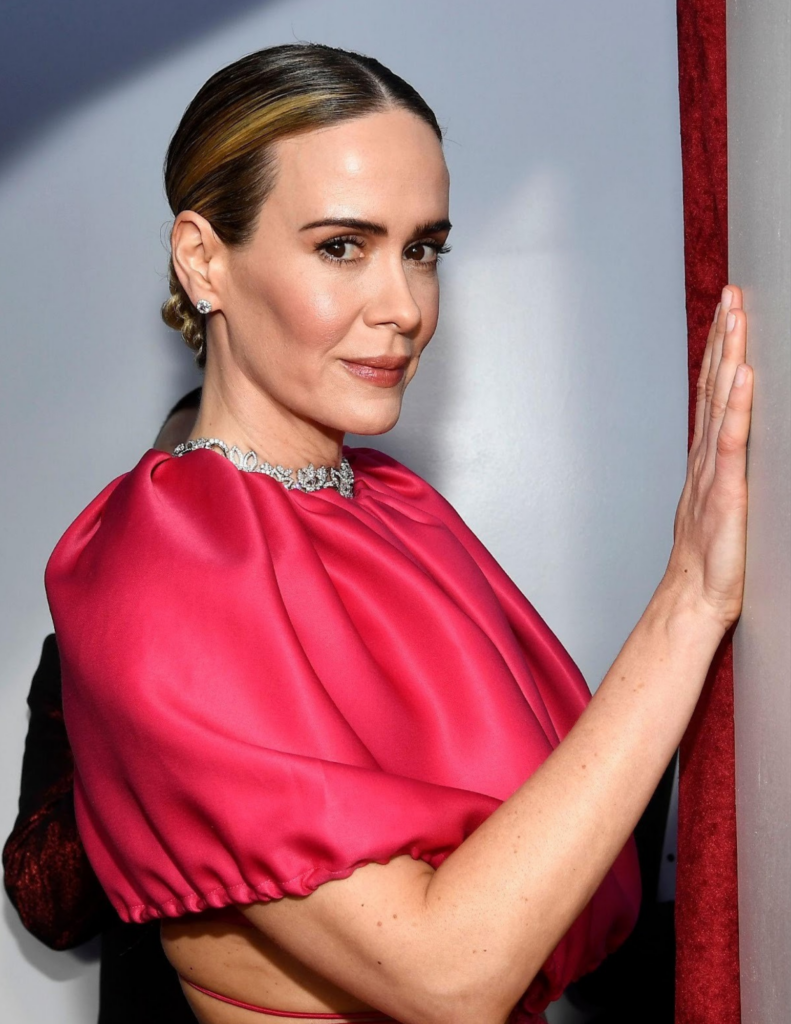
Her early career was steady — not flashy — and that foundation became her power.
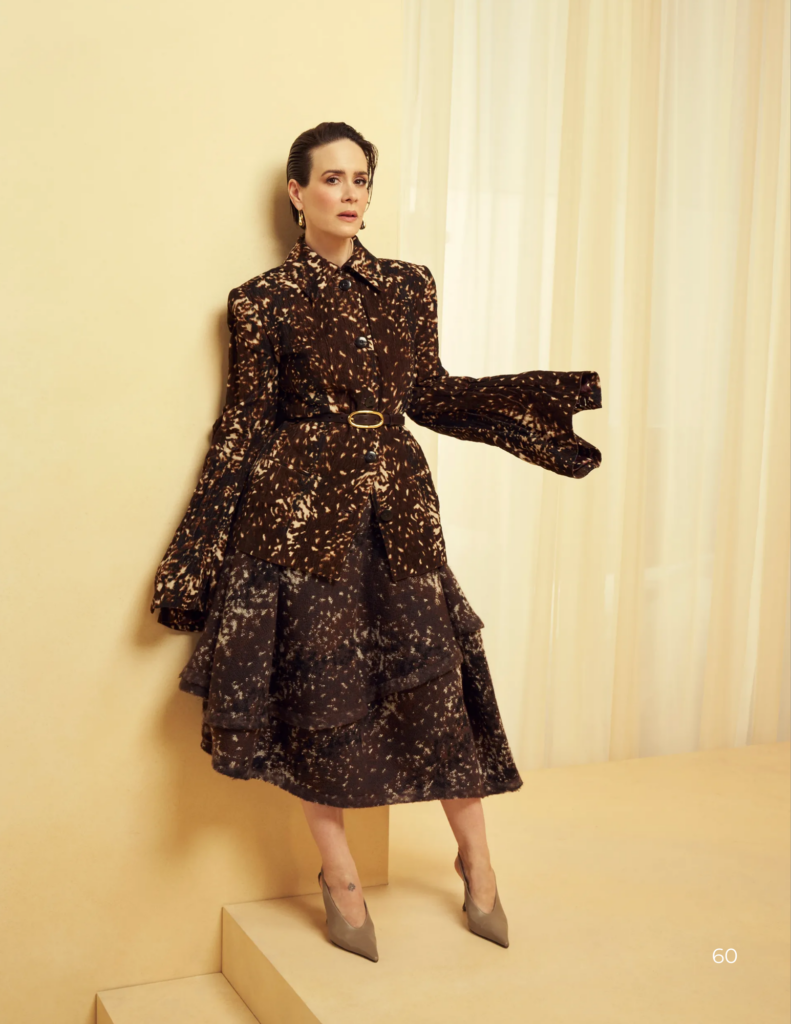
The Ryan Murphy Pivot
Her career changed dramatically when she entered the orbit of Ryan Murphy.
Their collaboration spans:
American Horror Story: Appearing in nine seasons across radically different roles.
American Crime Story (The People v. O.J. Simpson) — Emmy-winning performance as Marcia Clark.
Ratched: A psychologically severe reinvention of Nurse Ratched.
Three Murphy franchises. Multiple seasons. Radical reinventions each time.
Ryan Murphy once said of Paulson: “She can do anything.” And the body of work supports it.
The Uncanny Ability to Humanize “Crazy”
Paulson gravitates toward characters on the edge.
Psychologically distressed. Emotionally chaotic. Morally ambiguous. But she does not play caricatures.
In interviews, she has spoken openly about her own anxiety and emotional intensity.
he once told Interview Magazine:
“I am attracted to complicated women. I don’t understand simplicity.”
Another quote from The Guardian: “I never feel entirely sure. I always feel like I’m about to be found out.”
That vulnerability explains why her characters feel so raw.
They are not stylized madness.
They are controlled emotional excavation.

The Marcia Clark Reclamation
Her portrayal of Clark in American Crime Story was pivotal.
Clark had been mocked publicly in the 1990s.
Paulson reframed her as:
• Intelligent
• Overwhelmed
• Brilliant
• Undervalued
Paulson said about the role:
“I felt fiercely protective of her.”
That protective instinct became a cultural correction.
Mrs. America — Proof Beyond Murphy
In Mrs. America, Paulson played Alice Macray — a conservative woman conflicted by feminist progress.
It was restrained. Measured. Understated. Proof that outside Murphy’s theatrical universes, Paulson is equally potent.

The “Whackadoo” Factor (Your Word, Perfectly)
Off-screen, she’s quick-talking, self-deprecating, slightly neurotic in interviews. She laughs at herself. She’s hyper-aware. And that eccentricity makes sense. The best character actors don’t hide their strangeness. They refine it. Paulson has described herself as a “character actor in a leading woman’s body.” That statement alone explains her career.
Does She Feel Typecast?
She has acknowledged she is often cast as high-strung, unstable, or emotionally intense women.
But she has also expressed gratitude:
“If you’re going to be known for something, being known for transformation isn’t a bad thing.”
That’s the difference.
Typecast implies limitation.
She turned it into expansion.
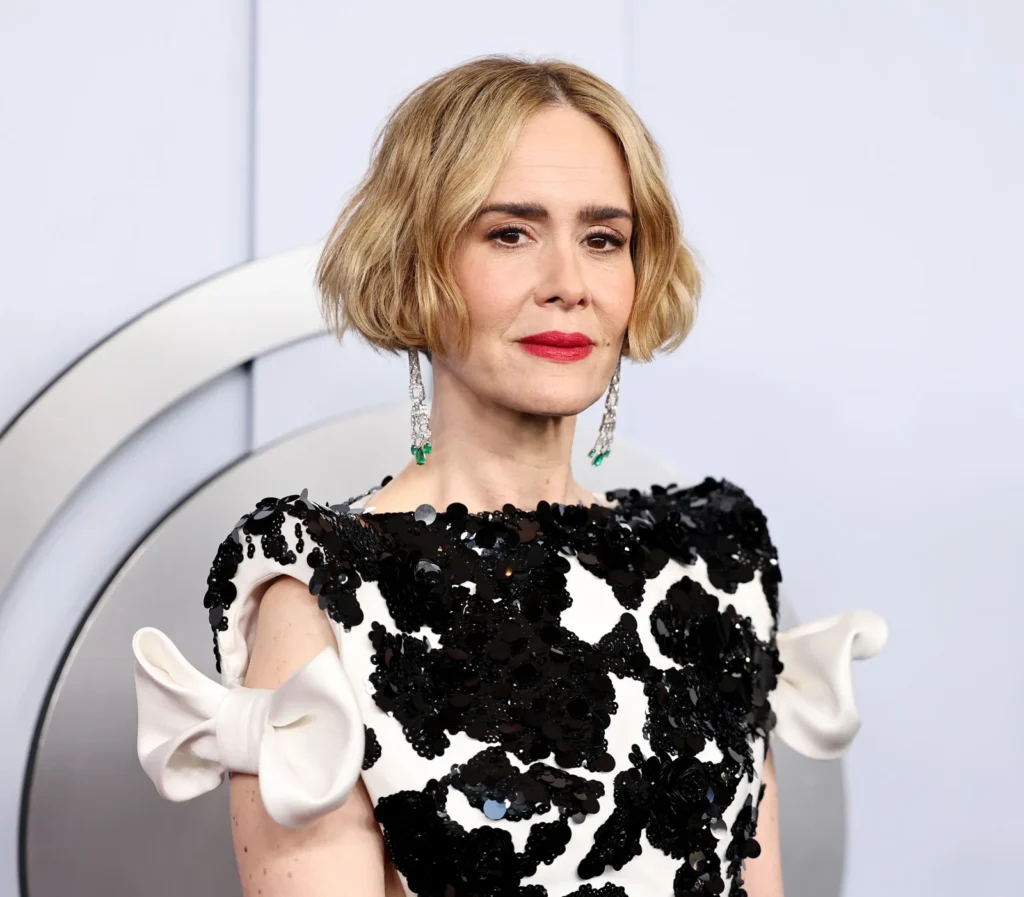
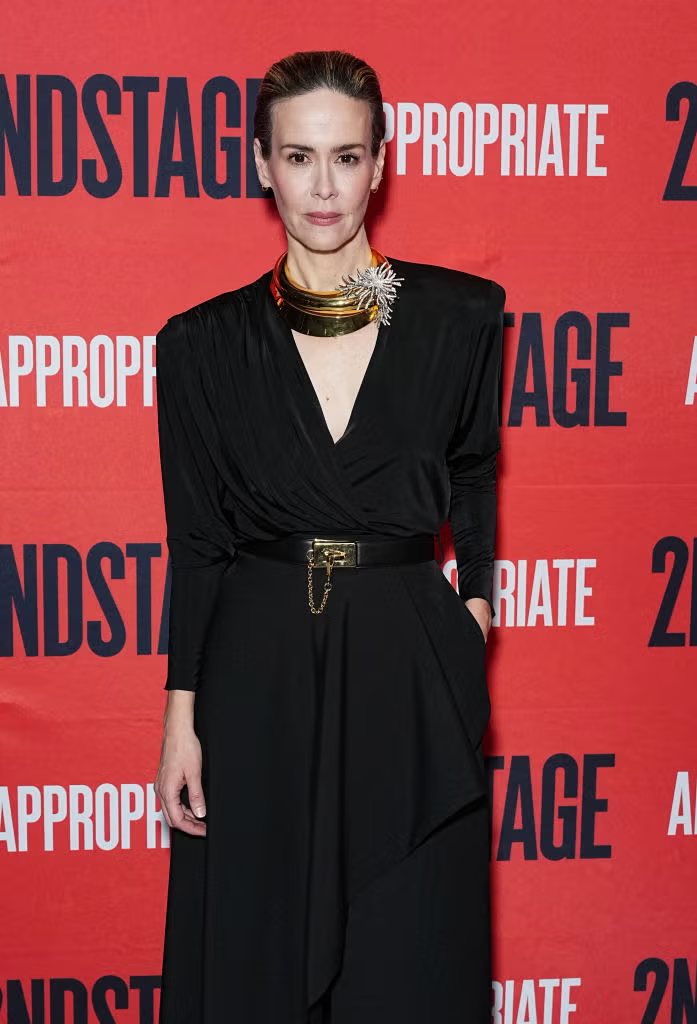
Why She Belongs in the Ageless Renaissance
Sarah Paulson is not youthful in the typical Hollywood marketing sense.
She is layered. She plays:
• Women who are messy
• Women who are brutal
• Women who are fragile
• Women who are frightening
• Women who are brilliant
She allows them to age. To wrinkle emotionally. To unravel.
That is revolutionary in a culture obsessed with gloss. She is proof that complexity is magnetic. And complexity does not expire.
The Murphy Muse — And More
Yes, Ryan Murphy amplified her reach. But she stabilized his worlds. Without Paulson, many of Murphy’s most iconic scenes would feel less grounded.
She anchors spectacle with psychology. She turns horror into humanity. She turns excess into empathy. That is not muse energy. That is pillar energy.
Final Reflection
Sarah Paulson does not simplify herself to fit roles.
She chooses roles that allow her to expand.
And in a moment where culture is rediscovering heritage, nuance, and depth —
She feels perfectly aligned with the times. Not because she reinvents herself.
But because she refuses to flatten herself. She contains multitudes.
And she performs all of them.
TOP 7 TRANSFORMATIONS: The Shape-Shifting Art of Sarah Paulson
These are not just performances. They are full psychological recalibrations.
Lana Winters
American Horror Story – Asylum (2012)
A journalist trapped inside a psychiatric institution.
Terrified. Resourceful. Eventually hardened.
Paulson turned vulnerability into power — moving from prey to survivor with terrifying realism.
Why It’s Iconic: The emotional breakdown scenes are operatic — but grounded. This is where she proved she could carry the anthology.
Cordelia Foxx
American Horror Story – Coven (2013)
From insecure daughter to Supreme witch.
Quiet leadership. Emotional restraint.
Why It Matters: A masterclass in subtle evolution. Authority without shouting.
Bette & Dot Tattler
American Horror Story – Freak Show (2014)
Conjoined twins. Two personalities. One body.
Why It’s Historic: She performed both roles separately. Distinct physicality. Distinct cadence. No gimmicks. This is technical brilliance.
Marcia Clark
American Crime Story – The People v. O.J. Simpson
From cultural punchline to fully dimensional woman.
Paulson humanized Clark and reframed public memory.
Emmy Winner.
Why It Changed Everything: She didn’t imitate Clark. She inhabited her.
Ally Mayfair-Richards
American Horror Story – Cult (2017)
Anxiety personified.
Phobias. Political panic. Psychological unraveling.
Paulson let this character be uncomfortable and unstable without parody.
Nurse Mildred Ratched
Ratched
Controlled. Calculating. Ice-cold.
Then — cracks.
Why It’s Chilling:
Stillness as menace. She dialed the performance inward, proving restraint is scarier than hysteria.
Alice Macray
Mrs. America
A conservative woman navigating feminism, identity, and marriage.
Soft. Restrained. Devastating.
Why It Shows Range:
No theatrics. No camp. Pure internal conflict.