Where Wholesome Storytelling, Hands-On Learning and Big Imagination Meet
At a time when children are surrounded by fast-moving screens, overstimulation and entertainment that often confuses cruelty with comedy, educator and creator Patricia White began asking a simple but powerful question: What if children’s programming could slow down, teach something meaningful and still be joyful?
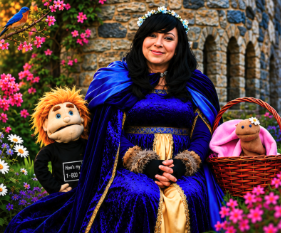
That question became Mrs. Whittle’s Cottage, an ambitious educational entertainment platform inspired by the warmth and wonder of programs like Mister Rogers’ Neighborhood, Sesame Street, Reading Rainbow and Captain Kangaroo. But this is not simply a nostalgic return to the television of Patricia’s childhood.
It is a carefully designed ecosystem connecting entertainment, classroom instruction, at-home learning, music, live performance, toys, games and social-emotional development.
Patricia’s vision was born from frustration. While reviewing children’s programming for a writing fellowship, she became increasingly disturbed by the negativity she saw: insults, unkind facial expressions and physical aggression played for laughs. As a parent, teacher and storyteller, she wanted something better.
“I want so much more for children,” she explained.
Mrs. Whittle’s Cottage was created to offer exactly that: wholesome, substantive and entertaining programming built around the belief that children can have fun without being exposed to violence, ridicule or constant chaos.
THE COTTAGE OPENS ITS DOORS
Each episode is designed around nine distinct five-minute segments, creating a varied hour of discovery that mirrors the natural curiosity of a child.
One moment, viewers may visit an alpaca farm in “Where in the World Are We Going Today?” The next, they may explore a future career through “When I Grow Up, I Can Be.” Snack time introduces simple food preparation, story time celebrates reading, and “That Some Kid” highlights children with special skills, talents or accomplishments—from chess and music to tumbling and art.
Crafts, songs and movement reinforce each lesson, while Gumdrop Learn-a-Lot, an animated sugar-coated character with hands, feet and a cheerful face, steps in as the cottage professor. Gumdrop can explain why leaves change color, introduce a mathematical idea or provide historical context when a segment needs an extra layer of learning.
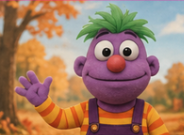
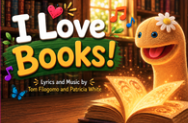
The recurring puppet characters bring personality and humor. Tilly is an enthusiastic little bookworm who sings about her love of reading. Connor is more resistant, approaching new activities with skepticism before eventually discovering that learning can be interesting after all.
Together, the characters create the sense of familiarity children need. They are not simply watching unrelated educational clips. They are returning to a world—and to friends—they recognize.
FROM FIVE MINUTES TO A FULL LESSON
What separates Mrs. Whittle’s Cottage from many children’s programs is that its educational content is not added as an afterthought.

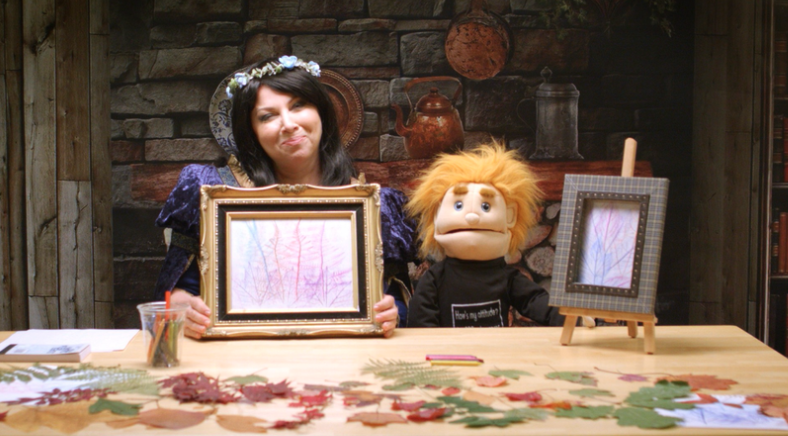
Each segment is designed with state and national standards of learning in mind. A five-minute television segment about leaves, for example, could expand into a 30-minute classroom lesson where students examine chlorophyll, learn vocabulary, create leaf rubbings, draw observations and contribute their artwork to a classroom tree.
The same lesson could then continue at home through an activity kit containing paper, crayons, a small frame and materials that allow the child to revisit the subject through play.
Patricia’s goal is not repetition for repetition’s sake. She wants children to encounter the same idea through multiple forms: visual, auditory, tactile and physical.
A child might watch the lesson, sing about it, move like a leaf falling from a tree, create an art project and later complete an activity with a parent. The concept remains consistent, but the experience continually changes.
That approach is especially important for active learners and children who struggle to remain seated for long periods. Mrs. Whittle’s Cottage makes movement part of the learning process rather than treating it as a disruption.

AN ENTIRE EDUCATIONAL ECOSYSTEm
The television or streaming series is only the beginning.
Patricia envisions digital curriculum subscriptions that allow teachers to download lesson plans, posters, vocabulary materials and printable activities tied directly to each episode. Families, homeschoolers, community centers and after-school programs could access their own versions of the content through affordable at-home memberships.
Physical activity kits would also function independently. A child would not need to watch the show or participate in a classroom lesson to enjoy a science, history, craft or social-emotional learning kit.
Beyond education, Patricia sees the potential for music, books, games, plush characters, toys and licensing. Songs such as “I Love Books,” “This Is the Way We Wash Our Hands” and “I’m Sorry, Forgive Me” are designed to reinforce the lessons while giving children music they can sing long after an episode ends.
Her long-term vision also includes live performances featuring Mrs. Whittle, puppeteers, prerecorded music, stories and audience participation. Patricia has already introduced the concept through library appearances, where children enthusiastically interacted with the puppets, participated in activities and remained engaged.
She hopes to eventually take the experience on a national tour with affordable ticket prices, allowing families from different economic backgrounds to enjoy a live educational performance together.
LEARNING THAT INCLUDES EVERY CHILD
Accessibility is not a side note in Patricia’s vision. It is central to it. She wants content to be available in multiple languages through scannable codes, supported by subtitles and, eventually, American Sign Language interpretation. She also wants children with disabilities represented on the program and included in activities that can be modified to support different physical and learning needs.
Her background makes that mission deeply personal. Patricia has spent more than two decades in education and holds degrees and certifications spanning English, multicultural education, administration and special education. She understands that children do not all learn in the same way—and that high-quality educational experiences should not be reserved for families in wealthy communities.
Affordability remains one of her priorities. She imagines different subscription levels that could serve schools, families and organizations without excluding those with limited resources.
Her belief is simple: every child deserves access to substantive, engaging and joyful learning.
THE CREATOR BEHIND THE COTTAGE
Mrs. Whittle’s Cottage is also a story about personal courage.
After more than 20 years in education, Patricia walked away from teaching to produce Hearts of the Hollow, a Sleepy Hollow-inspired musical she wrote and developed with composers.
The decision came during a period of grief and concern about her own health after losing three sisters, two to autoimmune illnesses.
She reached a point where postponing her creative dreams no longer felt acceptable.
The musical became one of the most challenging and rewarding experiences of her life.
It also taught her difficult lessons about financing creative work, finding collaborators and building a project beyond the initial spark of inspiration.
Rather than returning quietly to the life she had left, Patricia continued creating. She pursued special-education certification, developed scripted projects and expanded the world of Mrs. Whittle’s Cottage.
What some might have called an existential crisis was, in reality, a declaration: life could not be only about following the expected path. There were stories still waiting to be told.

THE NEXT CHAPTER
Patricia is now seeking the collaborators who can help Mrs. Whittle’s Cottage grow from a powerful proof of concept into a scalable educational brand.
Her immediate goal is to raise approximately $100,000 to create another pilot, build the first curriculum bundle, place the program in an initial group of schools and begin producing prototype activity kits and plush characters.
She is looking for a digital and physical publishing partner capable of connecting the television content to classrooms and homes.
She is also seeking relationships with toy and game manufacturers, licensing experts and investors who understand both the commercial possibilities and the responsibility that comes with creating for children.
Mrs. Whittle’s Cottage has the ingredients of something much larger than a show. It is entertainment children can enjoy. Curriculum teachers can use. Activities families can share. Characters children can love. And a world where learning feels warm, active, imaginative and safe.
At its heart, the cottage represents a return to something many parents and educators fear has been lost: the idea that children’s media can be gentle without being boring, educational without feeling like homework and entertaining without tearing someone else down.
Patricia is not trying to recreate the past.
She is taking the best of what came before and building something new for the children growing up now.
The door to Mrs. Whittle’s Cottage is open.
What it needs next are partners bold enough to step inside.