
An Evening That Begins at Sunset and Ends Under the Stars
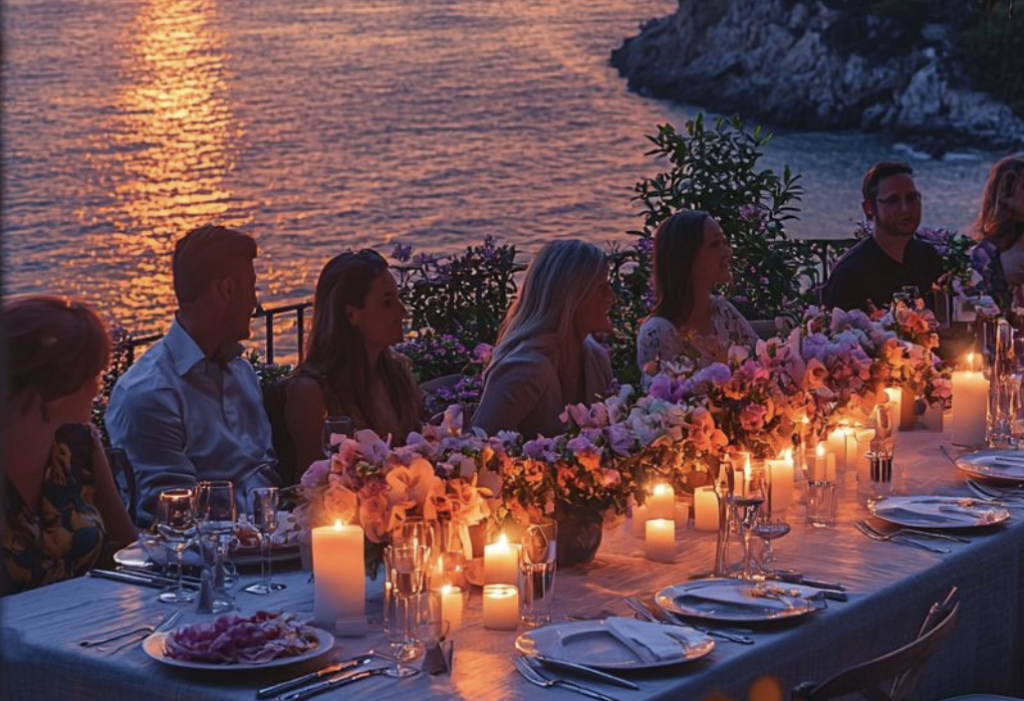
There are summer gatherings that sparkle, and then there are summer gatherings that smolder.
Plum at Dusk belongs to the second category. It is not the bright, citrusy energy of a midday luncheon or the playful ease of a beach picnic. It is richer than that. Moodier. More sensual. It begins at golden hour and lingers well into candlelight, unfolding like a perfectly paced dinner in a beautiful restaurant—one where every course feels intentional, every glass poured at the right moment, and every detail encourages guests to stay just a little longer.
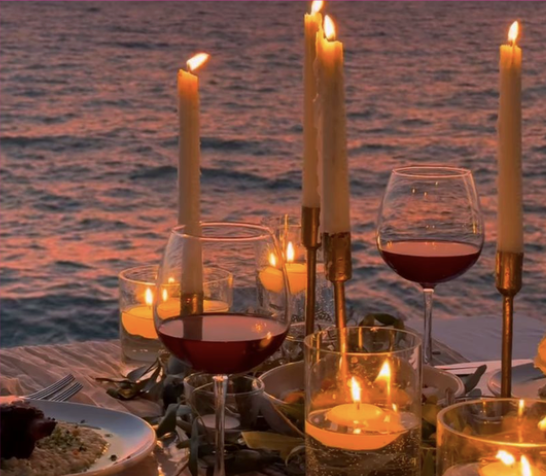
The feeling is deep plum, currant, blackberry, warm ivory, burnished gold, and candlelit amber. The setting can be a weathered stone patio, a lush garden terrace, or a beautifully dressed outdoor dining space near the water. String lights overhead, taper candles flickering across the table, and low music drifting through the evening air.
The florals should feel gathered rather than arranged—dahlias, garden roses, olive branches, seeded eucalyptus, blackberry vines, and herbs tucked loosely among ripe fruit and warm brass candleholders. The table should feel layered and inviting, dressed in linen and smoke-colored glass, with just enough drama to make the night memorable.
And then there is the menu, which should move the same way the evening does: sparkling at the start, generous and flavorful through dinner, and just a little indulgent by dessert.
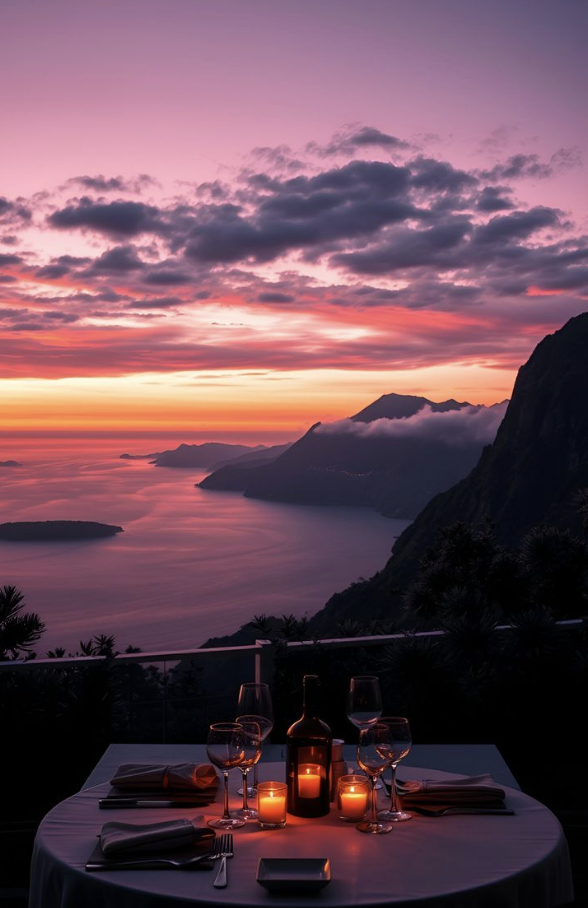
THE PLUM AT DUSK MENU
The evening begins with an aperitif in hand and a few passed bites while the last light lingers. This is not the moment for anything too heavy. The first course should feel elegant, fresh, and easy to eat while standing or mingling.
APERITIFS
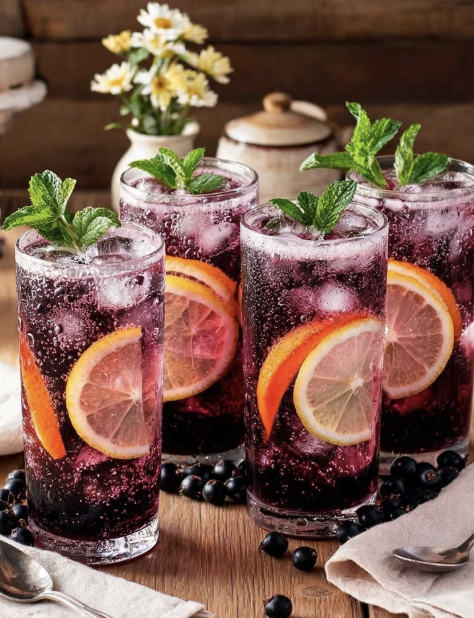
A Blackberry-Currant Spritz sets the tone immediately—prosecco, crème de cassis, fresh blackberries, lemon, and sparkling water, served over ice with rosemary or mint. For guests who want something spirit-free, a Sparkling Blackcurrant & Rosemary Fizz keeps the same jewel-toned mood with blackcurrant syrup, citrus, soda, and herbs.
If you want a third option, a Plum Bellini made with chilled plum purée and sparkling wine feels especially on-theme and beautiful in the glass.
STARTERS & PASSED BITES
For appetizers, I would give readers a few choices so the menu feels adaptable depending on whether they’re hosting a cocktail-style evening or a seated dinner. The strongest options for this mood are bites that feel luxurious but still summery.
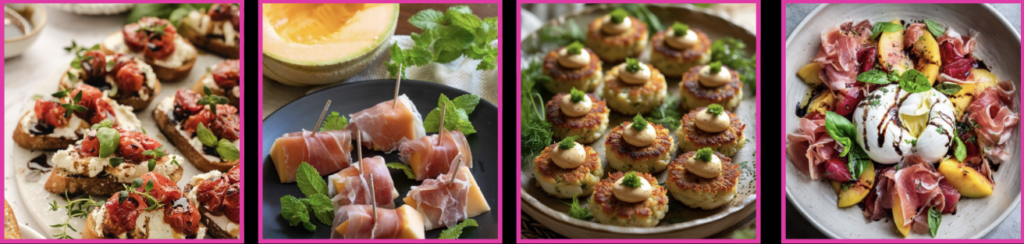
Whipped Ricotta Crostini with Roasted Figs & Hot Honey is one of the most natural choices for this story. Creamy ricotta, a little lemon zest, roasted figs, and a drizzle of hot honey instantly create that sweet-savory candlelit mood.
Prosciutto-Wrapped Melon with Basil brings salt, sweetness, and freshness to the table while still feeling polished.
Mini Crab Cakes with Lemon Aioli add something a little richer and more indulgent without becoming too heavy too early in the meal.
Burrata with Grilled Stone Fruit and Basil Oil works beautifully as either a passed starter or the beginning of a plated first course, especially if you want the menu to feel more elegant and less cocktail-party casual.
If you want a fourth appetizer that leans slightly moodier and more restaurant-like, Marinated Olives, Shaved Parmesan, and Warm Rosemary Almonds is perfect as a grazing plate on the table while guests sip their first drink.
FIRST COURSE
The first course should feel lush but not filling. It should wake up the palate without competing with the main event.
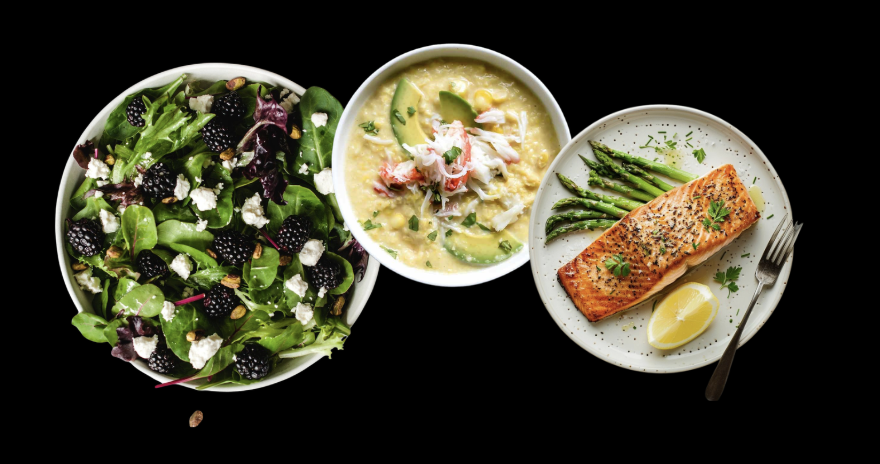
A Heirloom Tomato, Peach & Burrata Salad is probably the strongest lead option here. Thick slices of tomato, ripe peaches, torn burrata, basil, olive oil, sea salt, cracked pepper, and a restrained drizzle of aged balsamic. It’s abundant, colorful, and feels like the height of July.
A Butter Lettuce Salad with Blackberries, Goat Cheese & Candied Pecans would be beautiful if you want something with a little more tartness and texture while keeping the plum-blackberry story going.
A Chilled Sweet Corn Soup with Basil Oil and Lump Crab feels more chef-driven and slightly more elevated, especially if you want the dinner to feel like a restaurant tasting menu.
And if you want one option that feels romantic and rustic, a Charred Peach & Arugula Salad with Prosciutto and Burrata fits the mood perfectly.
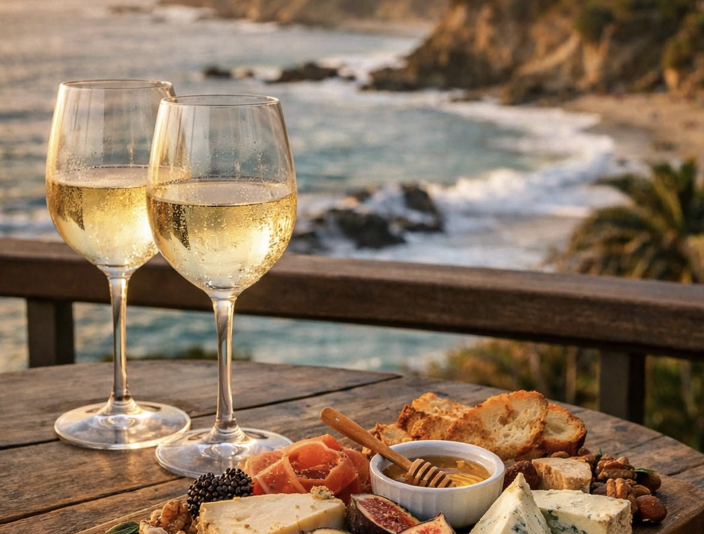
For these opening courses, I would pair a Sancerre, a crisp Sauvignon Blanc, or a mineral rosé—something chilled, bright, and elegant enough to cut through burrata, fruit, and olive oil.
DINNER
The main course is where Plum at Dusk should become deeper and more memorable. This is the part of the evening where the light has faded, the candles are glowing, and the menu can lean more sensual and savory. Rather than giving just one entrée, I’d offer four dinner choices within the feature so readers can decide whether they want seafood, meat, poultry, or vegetarian.
Herb-Marinated Grilled Salmon with Charred Lemon and Roasted Summer Vegetables is the cleanest, most universally appealing option. It feels elegant, summery, and candlelight-friendly. The salmon can be marinated in olive oil, thyme, parsley, garlic, lemon zest, and a touch of Dijon, then served with roasted broccolini, rainbow carrots, and shallots.
Herb-Crusted Filet with Red Wine Shallot Reduction is the most indulgent option and the one that gives the dinner its richest restaurant energy. Pair it with creamy potato purée or crispy fingerlings and grilled asparagus if you want the table to feel a little more dramatic.
Lemon-Thyme Roasted Chicken with Summer Corn, Crispy Potatoes & Pan Jus is the most relaxed-luxury choice. It feels like a beautiful dinner at a country house—less formal than filet, but deeply comforting and still elegant enough for the mood.
For a vegetarian option, Wild Mushroom Risotto with Parmesan, Truffle Butter & Crispy Sage is the clear winner. It’s velvety, aromatic, and rich in a way that still feels completely aligned with the plum, dusk, candlelight atmosphere.
DINNER PAIRINGS
With the salmon, I’d pour a lightly oaked Chardonnay or a floral Viognier. For the filet, a silky Pinot Noir or a restrained Cabernet Franc would be gorgeous. The chicken works beautifully with Viognier, white Burgundy, or even a crisp Grenache Rosé if you want to keep things summery. For the risotto, I’d go with Pinot Gris, Chardonnay, or even a very light Pinot Noir if you want to lean into the earthiness of the mushrooms.
SIDES FOR THE TABLE
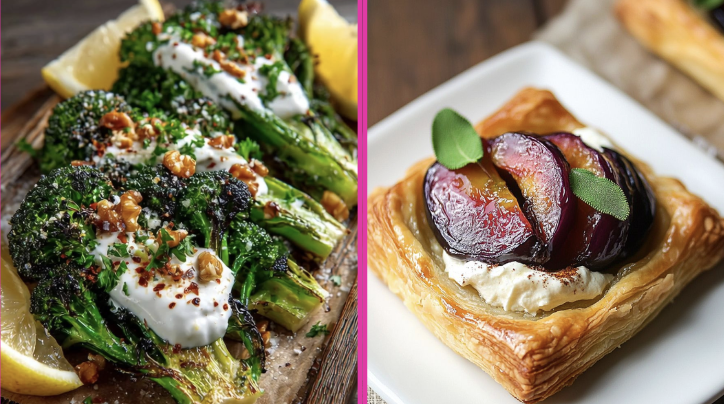
This dinner should also feel generous, so I would build in a few shared side dishes that can move across whichever entrée the host chooses. Roasted broccolini with lemon and chili flakes works beautifully with salmon or chicken. Crispy fingerling potatoes with rosemary and sea salt feel almost mandatory for this kind of evening. Charred corn with basil butter would add sweetness and warmth to the table, and a summer squash gratin with Parmesan and thyme would feel slightly more indulgent for a larger seated dinner.
DESSERT
Dessert is where the entire evening comes home. This should be the course that feels undeniably Plum at Dusk—warm, moody, a little sexy, and just rustic enough to feel inviting rather than fussy.
The hero dessert is absolutely Warm Plum Crostata with Honey Mascarpone. It gives you that late-summer plum note you’ve been chasing, and it feels like the kind of thing that would arrive at the table on a beautiful platter with everyone suddenly going quiet for a second. The plums should be roasted down with cinnamon, vanilla, and brown sugar until they become jammy and soft, then layered into a rustic tart and served warm with honey-whipped mascarpone.
If you want a second dessert option, Grilled Peaches with Cinnamon Toasted Almonds and Vanilla Bean Mascarpone is gorgeous—lighter than a tart but still romantic and rich enough for candlelight.
A Blackberry Tart with Crème Fraîche would also fit the palette beautifully and keeps the berry-currant-plum mood intact.
And if you want something with a little more drama, Dark Chocolate Tart with Sea Salt and Macerated Berries gives the menu a deeper, sexier finish while still working with the rest of the evening.
DESSERT PAIRINGS
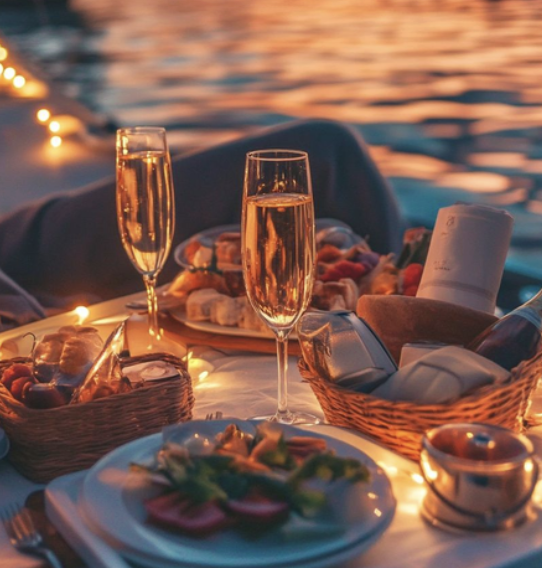
Dessert should be paired with something that feels lush but not cloying. A Late Harvest Riesling would be lovely with the crostata or peaches. A chilled Brachetto d’Acqui is a particularly beautiful option because it’s lightly sparkling, softly berry-driven, and feels romantic without being too serious. If you want to finish on a darker note, offer espresso and a small pour of Ruby Port with the chocolate tart.
THE FLOW OF THE NIGHT
What makes Plum at Dusk feel complete is the pacing. Guests arrive with a sparkling drink and something salty-sweet in hand. The first course feels fresh and summery, the main course deepens the mood, and dessert arrives just as the evening settles fully into candlelight. The wines should follow that same progression—light and crisp at the start, fuller and rounder at dinner, then softer and sweeter as the night winds down.
This is not a menu designed to rush anyone through the evening. It’s a menu designed to stretch it. To keep people at the table. To make the music sound better, the conversation slower, and the whole night feel just a little cinematic.
That’s the point of Plum at Dusk. It isn’t simply a dinner party theme. It’s a reminder that entertaining can be immersive, sensual, and deeply personal. The table should feel dressed. The food should feel generous. The pairings should feel considered. And the evening should feel like a story people are still talking about the next morning.
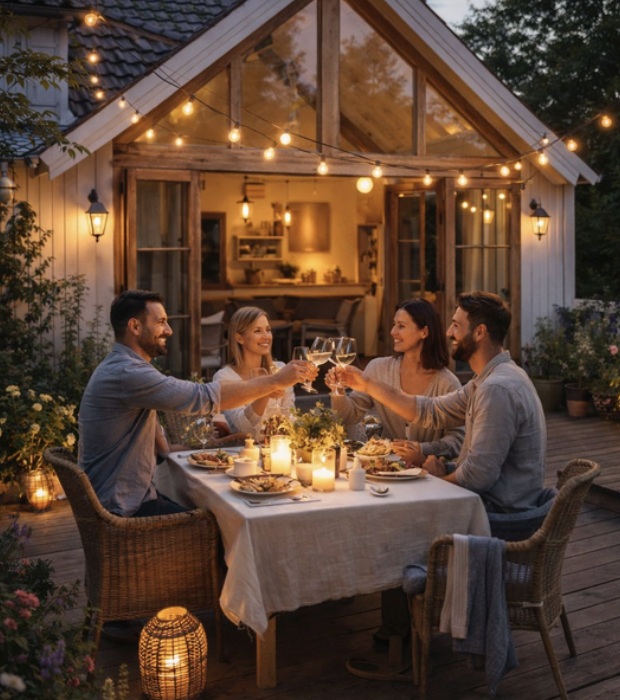
VIVID TABLE ADORNMENTS
The little details that make the table feel dressed for the evening
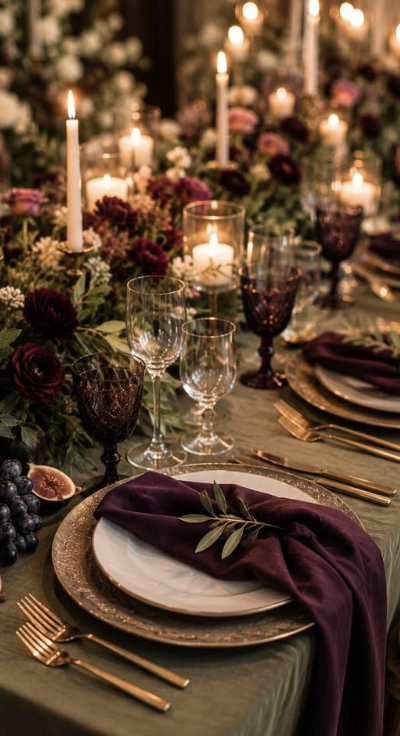
For Plum at Dusk, the table should feel less “styled” and more seduced into place—softly layered, deeply considered, and beautiful in a way that doesn’t beg for attention. This is not the night for stiff symmetry or anything that feels overly polished. It’s a table that glows. One that feels like it came together slowly over the course of a long summer afternoon, with candlelight and conversation already in mind.
Start with linen as the foundation—something with movement, texture, and a little romance. Soft plum, warm ivory, mushroom, dusty mauve, or a washed neutral all work beautifully here. Let the napkins feel generous and draped rather than tightly folded. They can be gathered with silk ribbon, tied loosely with velvet cord, or simply rested beneath the flatware with a softness that feels effortless rather than formal.
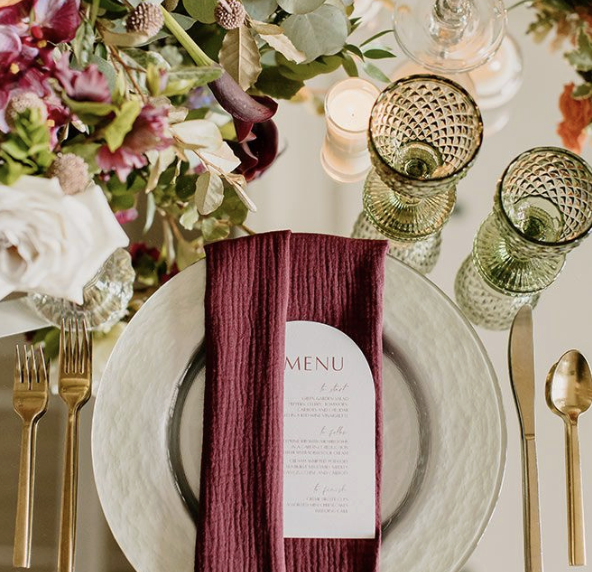
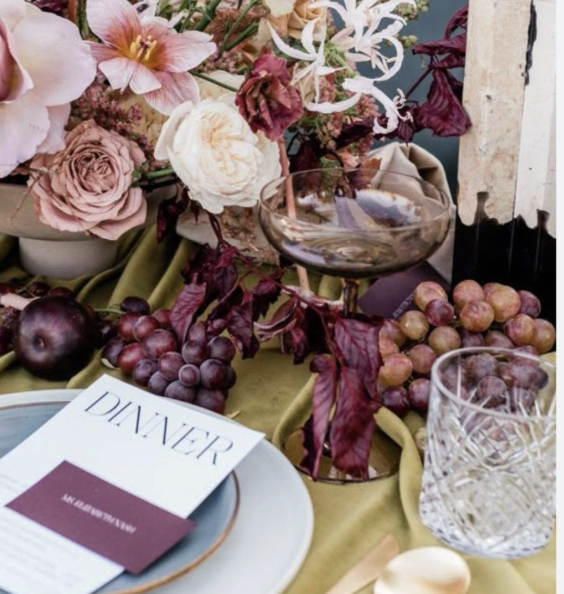
From there, let the adornments tell the story. A ripe fig or deep purple plum at each place setting immediately brings the theme to life and makes the table feel tactile and alive. Tuck in a handwritten place card or a tiny note for each guest—something personal, warm, and unexpected. A sprig of rosemary, thyme, or lavender tied at the stem adds scent, texture, and a little old-world charm without trying too hard.
The florals should feel gathered, not arranged. Think wine-colored dahlias, blush and mauve roses, blackberry branches, olive leaves, seeded eucalyptus, trailing herbs, and dark, moody greenery spilling low across the center of the table. Fruit can be worked in naturally—clusters of grapes, halved figs, or scattered plums placed between candleholders and floral vessels so the table feels abundant rather than decorative.
Candles are essential. Use taper candles in mixed heights and soft tones—ivory, burgundy, amber, smoky blush, even a muted aubergine if you want to deepen the palette. Let them flicker from cocktail hour through dessert. Brass or antique-inspired candleholders add warmth, but the overall effect should feel intimate rather than grand. Smoked glassware, brushed gold flatware, ceramic serving pieces, and a few small bowls of olives, nuts, or seasonal fruit help the table feel lived in and welcoming.
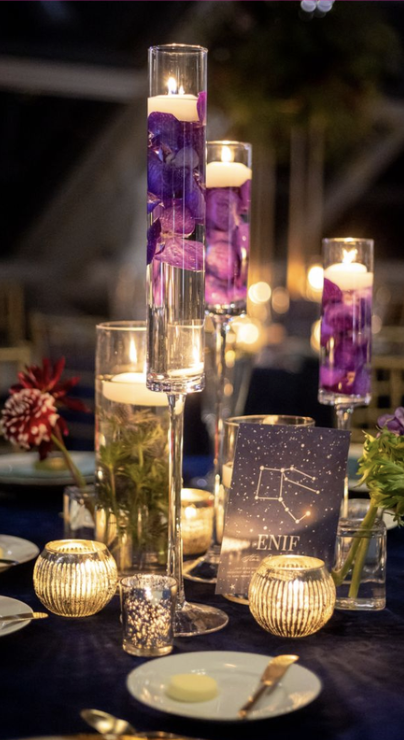
And if you want to add one more layer of magic, create small constellation cards for each guest—each card featuring a different constellation visible to the human eye, along with a few lines about its meaning or mythology. Place one at every setting so guests can take them outside after dinner, look up at the sky, and search for their constellation under the stars. It turns the evening into an experience rather than just a meal, and it gives the table one final little whisper of wonder.